This guide explains what usually changes between three months, six months and one year after a hair transplant, including healing, shedding, early growth, density development, texture changes and longer-term care.
Introduction
One of the most common questions after a hair transplant is: “Is this normal?”
That question can come up at almost every stage of recovery. In the first few days, patients may worry about sleeping, washing and protecting the grafts. A few weeks later, the concern often becomes shedding.
By three months, some people wonder why they are not seeing strong growth yet. By six months, there may be visible progress, but still not the full result. By one year, many patients expect to understand what their final outcome looks like.
The important thing to know is that a hair transplant result does not appear all at once. The procedure places grafts into carefully planned areas, but the visible result depends on healing, the normal hair growth cycle, aftercare, individual biology and the behaviour of the patient’s existing native hair.
This guide explains the broad stages of recovery and growth after a hair transplant, with a particular focus on what commonly changes at three months, six months and one year. These timelines should be treated as general guidance, not strict deadlines.
Patients should always follow the aftercare advice given by their own clinic or surgeon.
Contents
- Why hair transplant results take time
- The early recovery stage
- Shedding after a hair transplant
- What usually changes around three months
- What usually changes around six months
- What usually changes around one year
- Why timelines vary between patients
- Long-term care after a hair transplant
- When to contact your clinic
- Questions to ask during follow-up
- Where IK Clinics fits
- Conclusion
- Related reading
- References
- Disclaimer
Why Hair Transplant Results Take Time
A hair transplant works by moving suitable hair follicles from a donor area, usually from the back or sides of the scalp, into areas where improved coverage is needed. Once these grafts are placed, the scalp needs to heal and the follicles need time to settle before visible growth develops.
Hair grows in cycles. The main stages are anagen, the active growth phase; catagen, the transition phase; and telogen, the resting phase. Scalp hair does not grow instantly, and visible improvement can take months.
This is one reason why early photographs can be misleading.
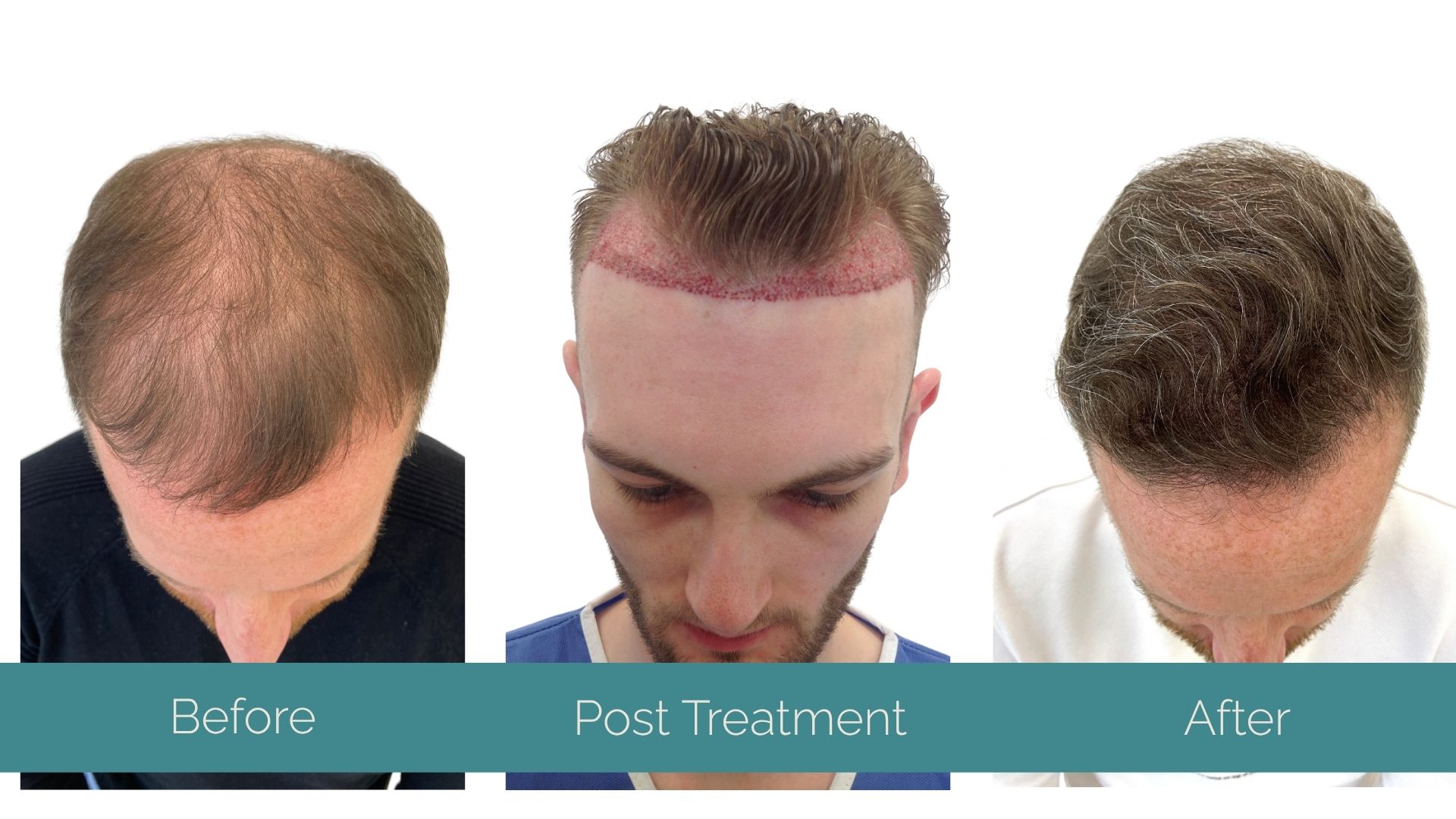
In the first week, the transplanted area may appear fuller because the implanted hair shafts are still visible. Then, during the shedding stage, those visible hairs may fall out. This can make the area look thinner again and may worry patients, but shedding does not automatically mean the transplant has failed.
In many cases, the visible hair shaft sheds while the follicle remains beneath the skin.
The result develops gradually. First, the scalp heals. Then shedding may happen. Then fine early hairs may begin to appear. Over time, those hairs may become thicker, stronger and easier to style.
The three-month, six-month and one-year stages are useful reference points, but they should not be used as rigid rules.
The Early Recovery Stage
Before looking at the longer results timeline, it helps to understand the early recovery period. This is when patients are usually most focused on protecting the grafts and supporting healing.
The First Few Days
In the first few days after a hair transplant, the main priority is to protect the grafts. Patients are usually given clinic-specific instructions on sleeping position, washing, spraying, medication, exercise, hats, alcohol, smoking and touching the scalp.
Some tenderness, tightness, redness or mild discomfort may be expected, depending on the procedure and the individual. Sleeping can feel awkward at first because patients may be advised to avoid rubbing or placing pressure on the recipient area. Some clinics recommend sleeping with the head slightly elevated for a short period, but advice can vary.
The most important rule is to follow the instructions provided by the clinic that carried out the procedure. Early aftercare can differ between clinics, depending on the method used and the patient’s individual circumstances.
The First One to Two Weeks
During the first one to two weeks, small scabs or crusts may form around the grafts. These usually clear gradually, often with gentle washing as advised by the clinic. Patients should not pick, scratch or aggressively rub the scalp.
This is also when many patients are keen to get back to normal routines, but rushing can be unhelpful. Exercise, swimming, steam rooms, heavy sweating, strong sun exposure and harsh products may need to be avoided for a period.
The exact timing should come from the treating clinic.
A calm, careful approach during the first couple of weeks can help patients feel more in control. It also reduces the risk of accidentally irritating the scalp or disturbing the graft area too soon.
Shedding After a Hair Transplant
Shedding is often the stage that causes the most anxiety. A patient may feel pleased immediately after surgery because the implanted hairs are visible, only to feel discouraged when those hairs begin to fall out.
In many cases, shedding after a hair transplant is expected. The visible hair shafts can shed while the follicles remain in place beneath the skin. This can make the transplant look as though it has disappeared, even though the growth process is still unfolding.
Shedding can also affect the way the surrounding hair looks. Some patients may notice temporary thinning in nearby native hair, sometimes described as shock loss or telogen effluvium. This can make the area look worse for a period, which can understandably feel worrying.
The key reassurance is that shedding alone is not enough to judge whether a transplant has worked. The more meaningful assessment comes later, once new growth has had time to appear and mature.
What Usually Changes Around Three Months
The three-month stage can be one of the most mentally difficult points in the hair transplant timeline. The scalp may look largely healed on the surface, but the visible cosmetic result may still be limited.
The Scalp May Look Healed, But the Result Is Not Finished
By around three months, many patients no longer look as though they have recently had a procedure. Redness may have settled, scabs should usually be gone, and the donor area may be much less noticeable.
However, looking healed is not the same as seeing the final result.
At this stage, many patients are still waiting for meaningful growth. The transplanted area may look patchy, sparse or uneven. Some early hairs may be visible, but they can be fine, soft or difficult to notice in certain lighting.
This is why three months is usually too early to judge the outcome. Daily mirror checking and close-up photographs can make anxiety worse, especially because lighting, hair length, camera angle and styling can all change how the area appears.
Early Growth May Be Fine or Uneven
If new hairs are visible at around three months, they may not look like the final hair. They can appear thin, soft, wispy, slightly wiry or irregular. Some hairs may grow earlier than others, and one area may seem to be developing faster than another.
This unevenness can feel frustrating, but it is not unusual. Hair transplant growth does not usually happen in a perfectly even pattern. A hairline may show early signs before the crown, or one side may look slightly ahead of the other.
At this stage, the best approach is usually patience, sensible hair care and continued communication with the clinic. Patients should follow their aftercare guidance and attend any recommended reviews.
Shedding Worries Can Continue
By three months, some patients worry that shedding has lasted too long or that growth has not started quickly enough. In many cases, the follicles simply need more time before producing visible hair above the scalp.
Three months should be viewed as an early checkpoint, not a final judgement. If there is pain, inflammation, unusual redness, discharge, crusting or sudden worsening, patients should contact their clinic.
But in terms of cosmetic growth, three months is often still early in the journey.
What Usually Changes Around Six Months
Six months is often the point where patients begin to feel more encouraged. The result may still be incomplete, but there is usually more visible progress than at three months.
Growth Is Often More Noticeable
By around six months, many patients can see more obvious growth in the transplanted area. The new hair may be long enough to style lightly, blend with surrounding hair or create a clearer hairline shape.
For some patients, this is the first point where the transplant begins to feel real. However, six months is still not the final result. The hair may not yet have reached full thickness. Density may still be developing. Texture may still be settling. Some areas may still look behind others.
A six-month result should be understood as progress, not completion. It can be useful for comparison photographs, but it should not be used as the only measure of success.
Density Starts to Build
Density is not only about how many grafts were placed. It is also influenced by hair shaft thickness, hair length, curl, colour, contrast with the scalp and the way the hair lies.
At six months, many of these visual factors are still developing. Fine early hairs may become stronger over time. Hair that looked irregular may become easier to style. The transplanted area may start to provide more coverage as the hair grows longer and improves in quality.
Patients should be careful not to judge density too early. A hair transplant is also limited by donor supply. The aim is often to create a natural-looking improvement while protecting future options, rather than trying to recreate the density someone had as a teenager.
Hair Care Becomes More Normal, But Still Matters
By six months, many patients have returned to a more normal hair care routine. However, “normal” should still mean sensible. Harsh brushing, repeated heat damage, aggressive chemical treatments or tight hairstyles can affect hair quality and scalp comfort.
Patients should ask their clinic when it is appropriate to colour the hair, use styling products, restart certain treatments or return fully to their usual grooming habits. Advice may vary depending on healing, scalp sensitivity and the type of procedure carried out.
Six months is not the point where aftercare stops mattering. It is more accurate to see it as the stage where visible progress and longer-term maintenance begin to overlap.
What Usually Changes Around One Year
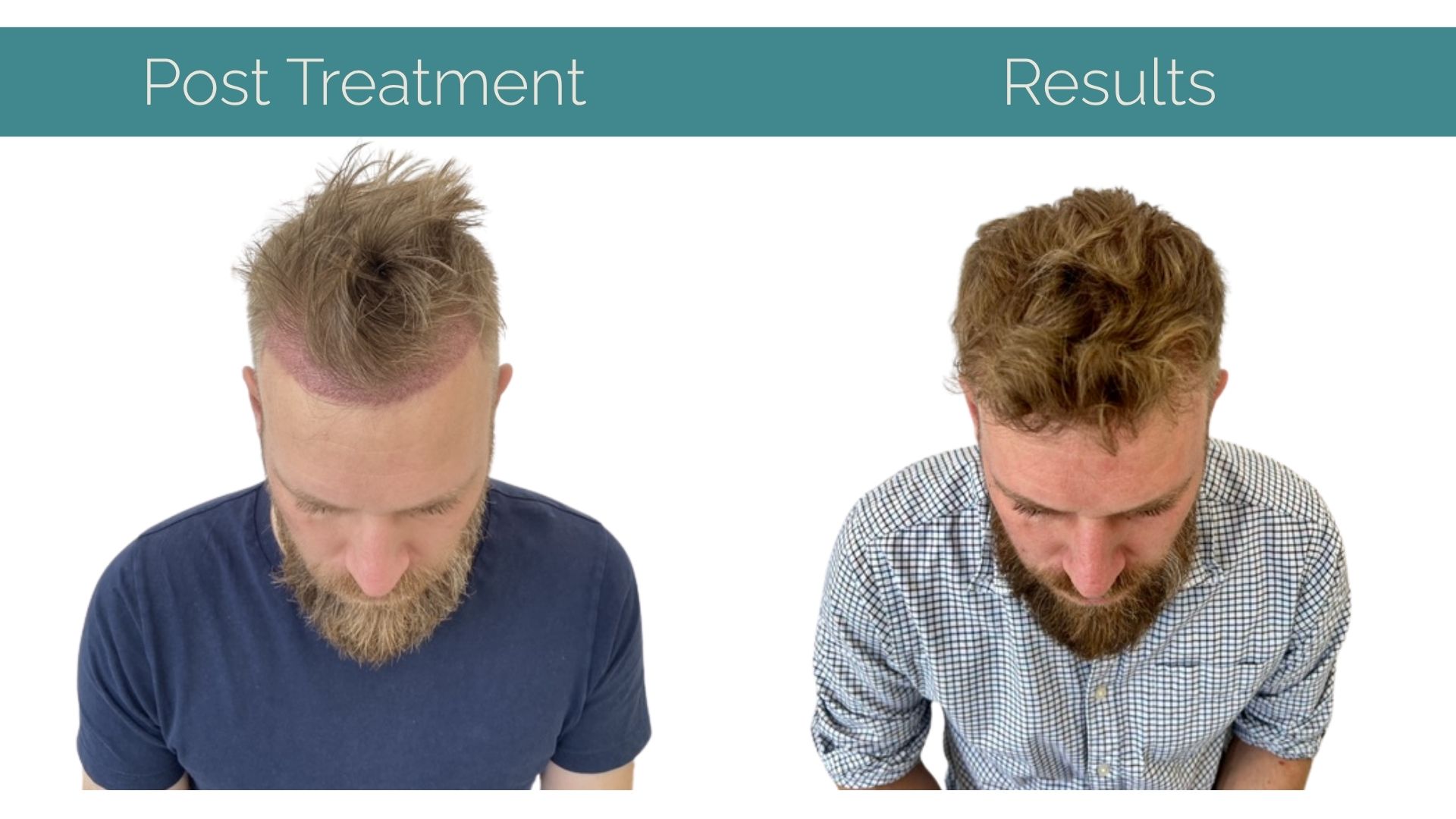
The one-year point is usually the most meaningful milestone for assessing a hair transplant result. By this stage, many patients have enough visible growth to understand the shape, coverage and overall cosmetic impact of their treatment.
The Result Is Usually More Mature
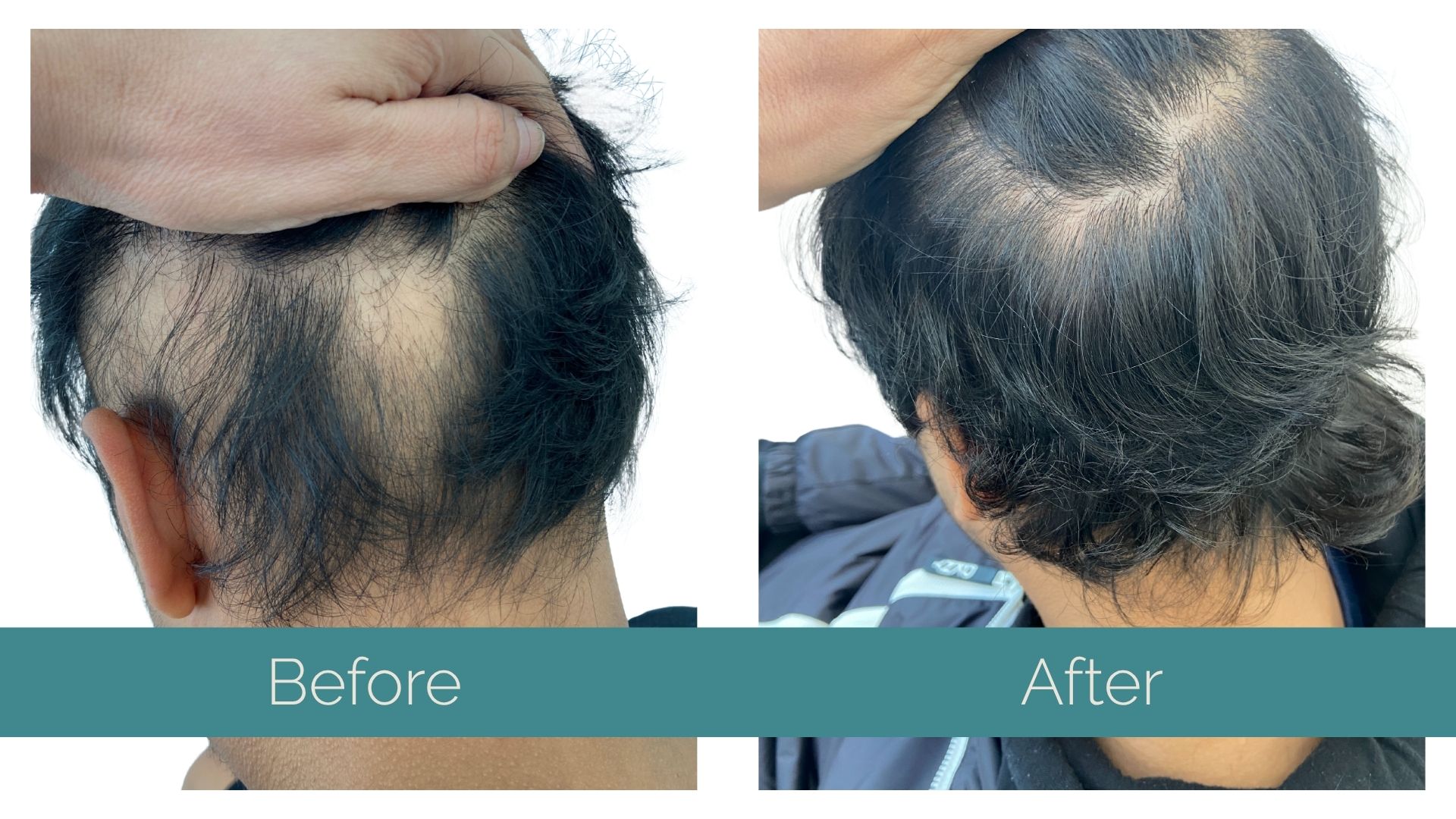
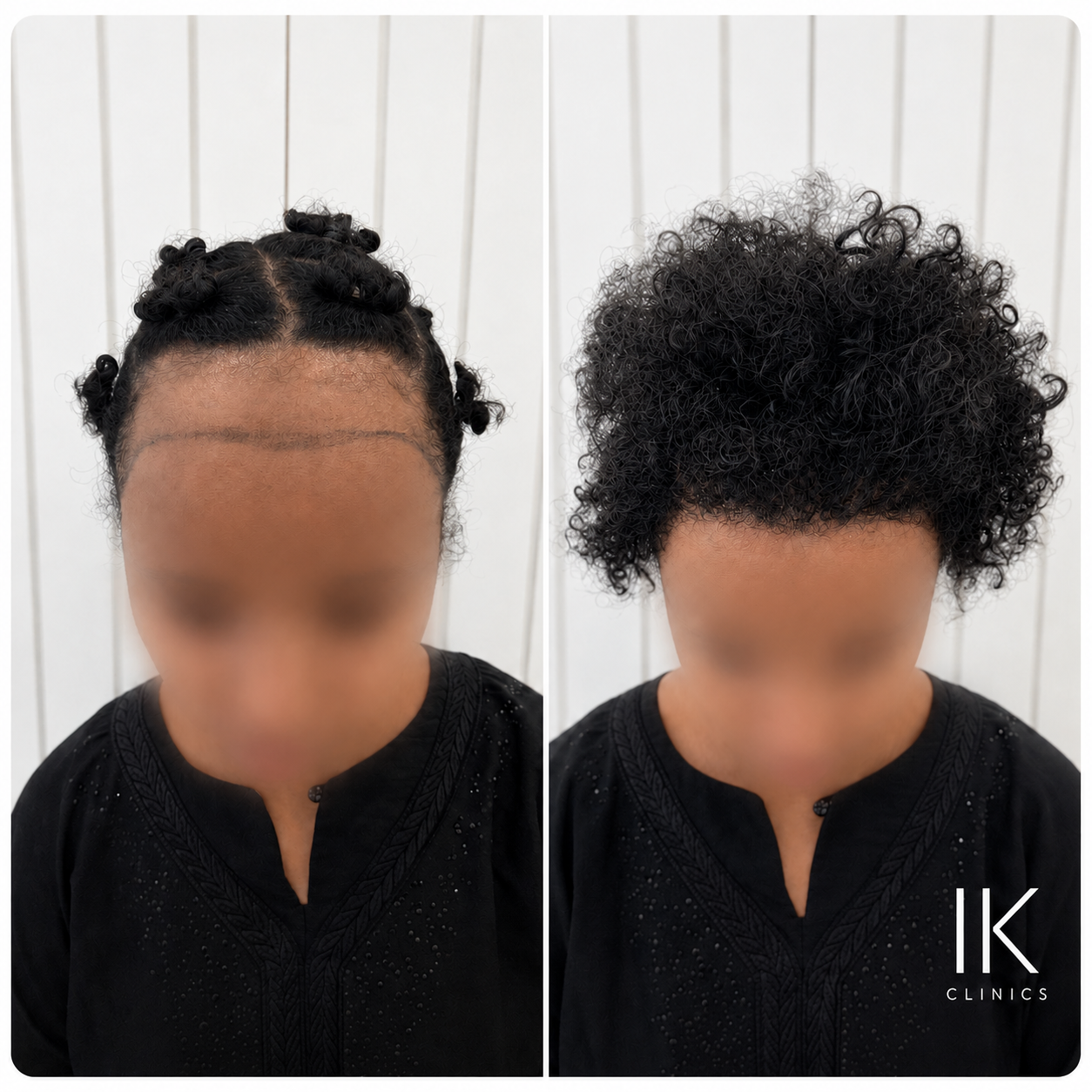
At one year, transplanted hair is often longer, thicker-looking and easier to style. The hairline may look more settled, and the transplanted area may blend more naturally with the surrounding hair. Texture changes that were noticeable at six months may have softened.
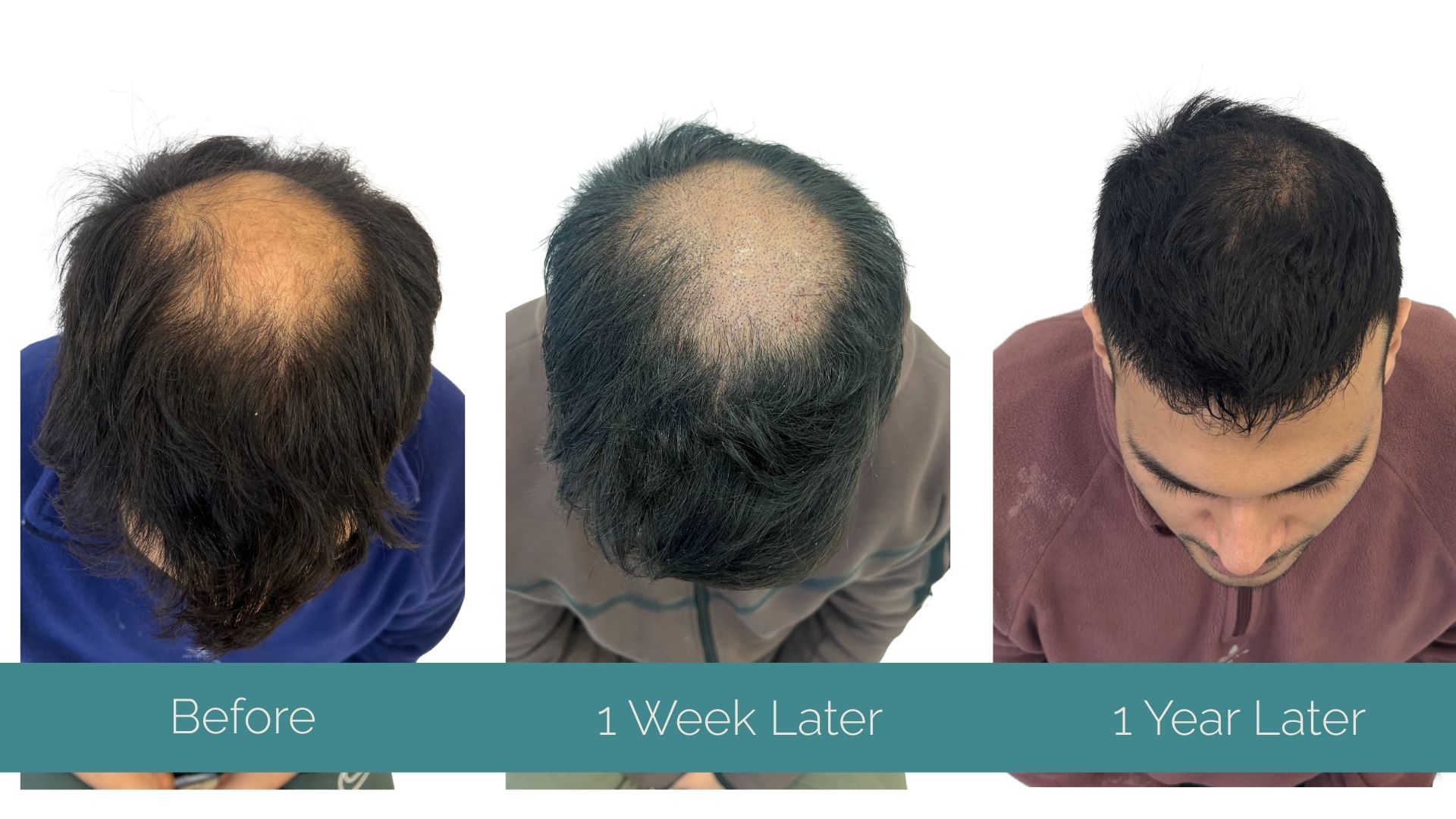
This is when before-and-after photographs often become more useful. Comparing images from before surgery, three months, six months and one year can show the gradual development more clearly than daily mirror checks.
That said, one year is not an exact finish line for every patient. Some people continue to see subtle maturation beyond 12 months. Hair may keep improving in texture, styling behaviour and perceived fullness, especially where growth was slower.
The Long-Term Picture Becomes Clearer
At one year, the conversation often shifts from “Is it growing?” to “How does this fit into my long-term hair plan?”
This matters because a hair transplant moves hair, but it does not stop future hair loss in surrounding native hair. Some patients may need to think about maintenance treatments, future planning or ongoing monitoring of their existing hair.
A good result at one year should still be considered in the context of donor area preservation, age, hair loss pattern, family history and realistic expectations. Hair restoration should not only focus on the immediate result. It should also consider how the patient’s hair may change over time.
Refinement Is Not Always Failure
At the one-year stage, some patients may be happy with their result but still want more density, improved crown coverage or further refinement. This does not automatically mean the first transplant has failed.
Hair restoration is limited by donor supply, and not every patient should have more grafts placed straight away. In some cases, another procedure may be appropriate. In others, it may not be advisable or necessary.
A responsible clinic should help the patient understand the difference between normal maturation, realistic density limits, ongoing native hair loss and a genuine concern that needs review.
Why Timelines Vary Between Patients
No two patients follow exactly the same timeline. Several factors can influence how quickly the result appears and how full it looks.
Hair Characteristics
Hair thickness, curl, colour and texture all affect the appearance of coverage.
Thicker hair shafts may create a fuller look. Wavy or curly hair can provide more visual coverage than very straight hair. Lower contrast between hair colour and scalp colour can also make thinning less obvious.
These features do not change the number of grafts, but they can change how the result is perceived.
The Area Treated
Different areas can appear to mature differently. Hairline work may be easier to notice early because it frames the face. Crown work can sometimes feel slower because the crown has a wider surface area and a natural swirl pattern.
Patients should avoid comparing their crown result with someone else’s hairline result. The design, graft numbers, hair direction and starting point may be completely different.
The Starting Point
A patient with early recession and strong surrounding hair may see a different type of improvement from someone with more advanced thinning. If the surrounding native hair continues to thin, the overall appearance can change even if the transplanted hairs are growing.
This is why assessment and planning are important before treatment. A good consultation should look at donor area, future hair loss risk, hair characteristics, medical suitability and expectations.
Aftercare and General Health
Following aftercare instructions is especially important in the early period. This includes washing, sleeping, avoiding trauma to the grafts, attending follow-ups and asking for advice when something feels wrong.
General health may also influence recovery. Nutrition, smoking, stress, medical conditions, scalp health and medication changes may all be relevant. Patients should tell their clinic about any health changes and should not start or stop prescribed medication without appropriate medical advice.
Long-Term Care After a Hair Transplant
A hair transplant result should not be seen as something that ends at one year. The transplanted hair may continue to grow, but the surrounding native hair may still need care and monitoring.
Keep a Sensible Hair Care Routine
Once the scalp has healed and the clinic has confirmed that normal washing can resume, hair care should focus on keeping the scalp clean without being unnecessarily harsh. Gentle washing, careful styling and avoiding repeated damage can all support the overall look and feel of the hair.
Patients should ask their clinic about colouring, chemical treatments, swimming, gym routines, close haircuts and specialist products if they are unsure.
Think About Maintenance
Some patients may be advised to consider maintenance options to support their existing native hair. This could include treatments such as minoxidil, finasteride, PRP or other clinic-recommended options where suitable.
However, these are not appropriate for everyone. Patients should only use treatments after proper advice from a qualified professional. The important point is that transplanted hair and native hair should be considered together as part of a longer-term plan.
Use Progress Photographs Carefully
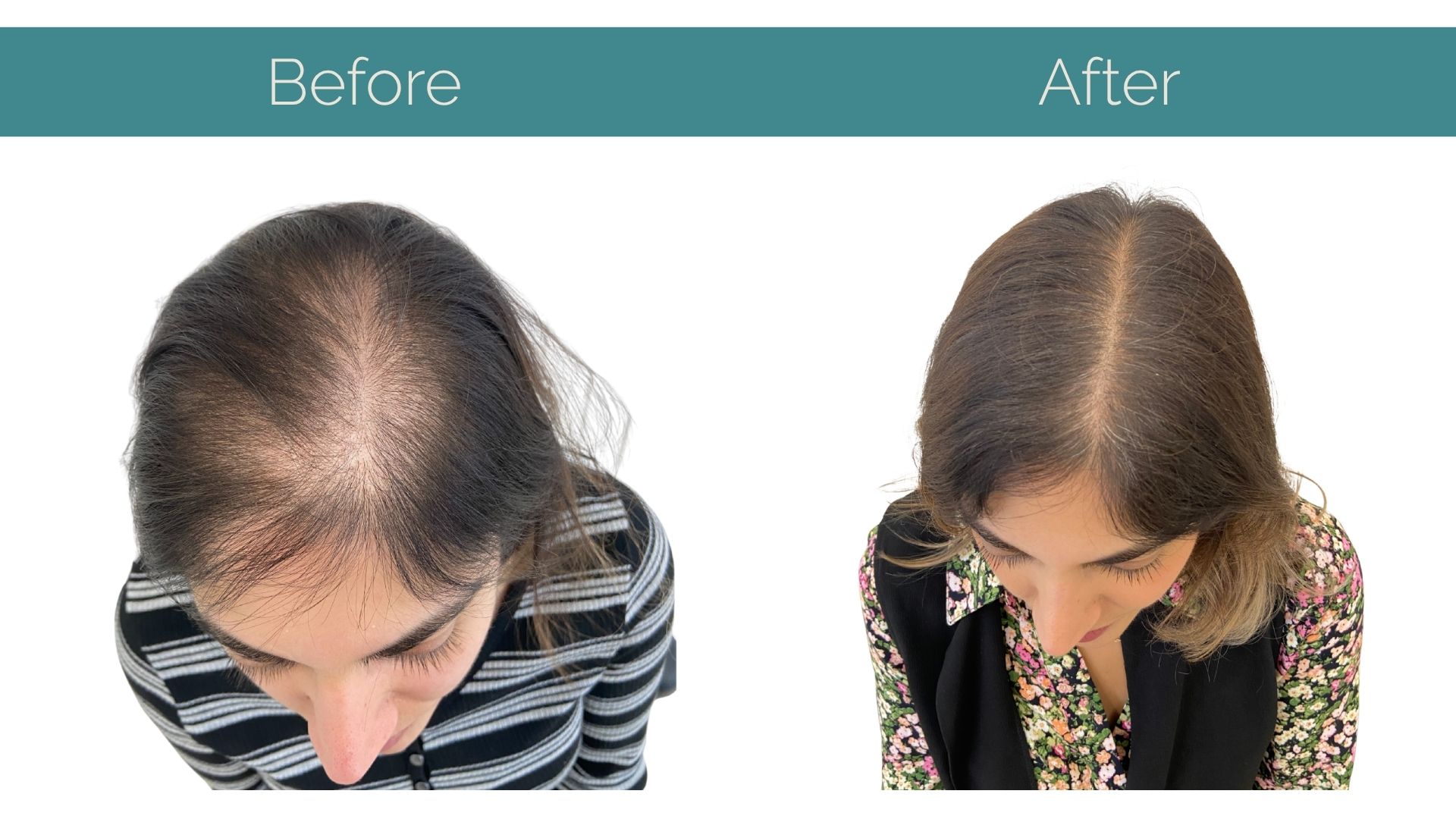
Monthly photographs can be helpful, but only if they are taken consistently. Try to use the same lighting, angles, hair length and styling. This gives a more accurate picture than random selfies taken in different conditions.
Daily checking is rarely useful. Hair growth is slow, and constant inspection can make normal variation feel like a problem.
When to Contact Your Clinic
Most hair transplant recovery concerns are not emergencies, but some symptoms should be checked promptly.
Patients should contact their clinic if they notice increasing pain, worsening swelling, unusual heat, spreading redness, pus, a wound opening, fever, feeling generally unwell or anything that looks infected.
Patients should also ask for advice if they accidentally knock the graft area early in recovery, experience unexpected bleeding, have a reaction to a product or medication, or are unsure whether they can restart an activity.
For cosmetic concerns, timing matters. At three months, the answer may simply be reassurance and monitoring. At six months, the clinic may compare progress and advise continued patience. At one year, there can usually be a more meaningful discussion about the result and any possible next steps.
Questions to Ask During Follow-Up
A good follow-up appointment should help patients understand their own progress rather than relying on generic timelines. Useful questions may include:
What stage of growth would you expect me to be at now?
Is my shedding pattern within the normal range?
Are there any signs that my scalp needs to be reviewed?
When can I return to my usual shampoo, styling products or hair colouring?
Should I consider any maintenance treatment for my native hair?
How should I take progress photographs?
When is the right time to assess the final result?
If I want more density in the future, how would that affect my donor area?
Is my hair loss likely to continue around the transplanted area?
These questions can help patients feel more informed and less anxious during recovery. They also support realistic expectations, which are central to a good hair restoration journey.
Where IK Clinics Fits
At IK Clinics in Leicester, hair restoration is approached as a patient-specific journey rather than a one-size-fits-all procedure.
This matters because the recovery timeline is not just about waiting for hair to grow. It is about understanding the patient’s starting point, donor area, hair loss pattern, expectations, aftercare needs and longer-term plan.
For patients who are anxious about shedding, slow growth or the difference between six months and one year, a clinic-led approach can provide reassurance with context.
A patient may need to understand whether what they are seeing is part of normal recovery, whether their native hair is continuing to thin, whether their hair care routine needs adjusting, or whether they simply need more time.
IK Clinics’ wider educational content covers post-transplant sleep, shedding, long-term care, results at six months versus one year and hair care after a transplant.
Together, these themes reflect one of the most important messages in hair restoration: the operation is only one part of the journey. Healing, aftercare, patience and realistic planning all influence the final experience.
A consultation or follow-up appointment should give patients space to ask practical questions, discuss concerns and understand what is realistic for their own hair. The aim is not to rush judgement at three months or overpromise at six months. It is to help each patient understand their own progress safely and clearly.
Conclusion
Hair transplant results develop gradually.
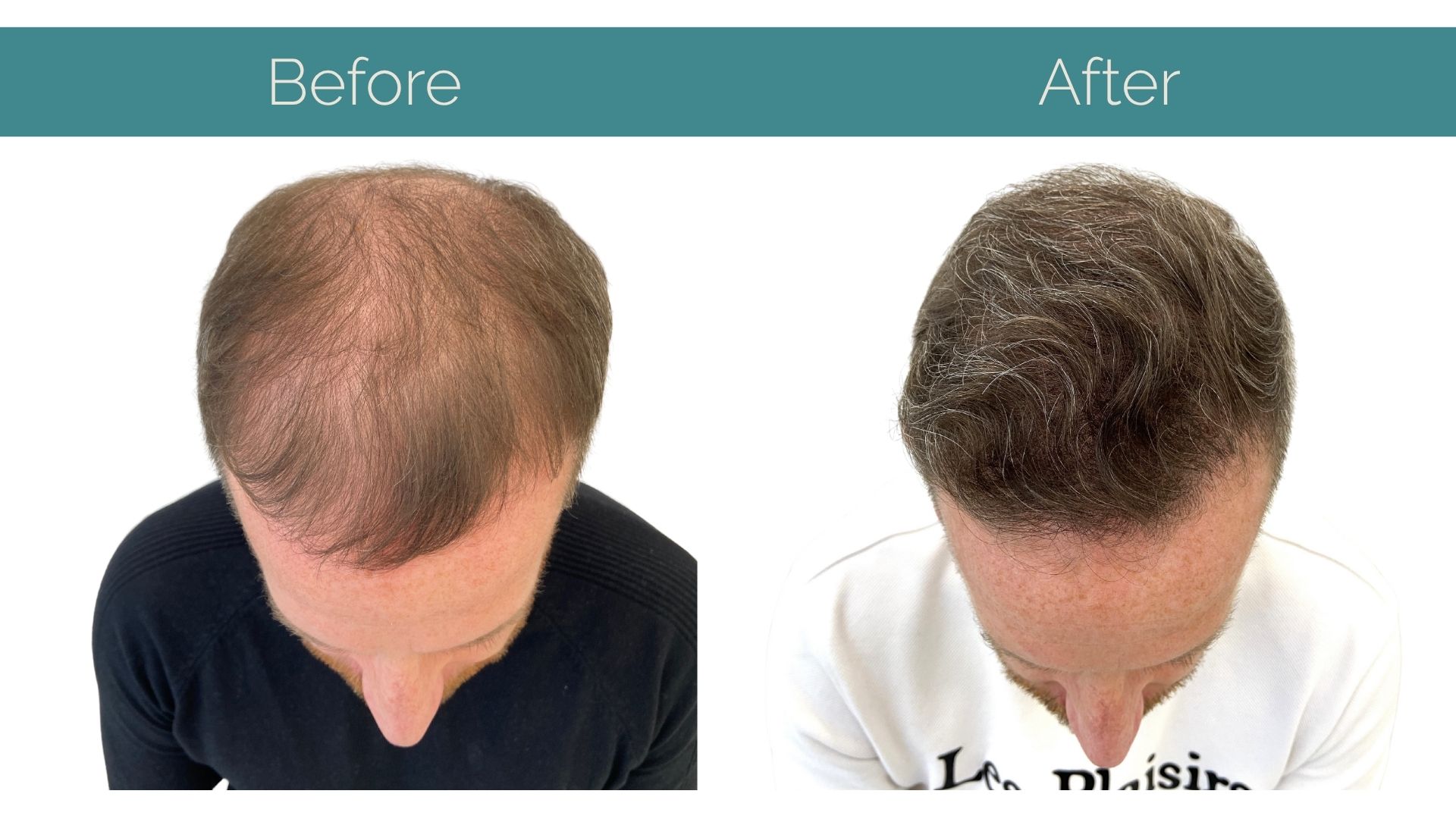
At three months, many patients are still in the waiting stage, with shedding behind them and only early growth beginning. At six months, growth is often more visible, but density, texture and styling quality are still developing. At one year, the result is usually much more mature and easier to assess, although some patients may continue to see subtle improvement beyond that point.
The main reassurance is that slow progress does not automatically mean poor progress.
Shedding can be normal. Early growth can look thin or uneven. Six-month results are not final. One-year results should be assessed in the context of long-term hair loss, donor area planning and realistic expectations.
Patients should follow their own clinic’s aftercare guidance, attend recommended follow-ups and ask for advice if they are worried. A hair transplant is not just a procedure. It is a recovery and growth journey, and understanding the timeline can make that journey feel calmer and easier to manage.
Related Reading
What Long Term Care Is Required After Having Hair Restoration Treatments
Is It Normal for My Hair Transplant to Shed?
What Hair Care Routine Should You Follow After a Hair Transplant?
References
International Society of Hair Restoration Surgery, FUE Hair Transplant: Benefits, Process & Recovery.
International Society of Hair Restoration Surgery, FUT Hair Transplant: Benefits, Procedure & Recovery.
International Society of Hair Restoration Surgery, After Hair Restoration Surgery.
NCBI Bookshelf, StatPearls, Physiology, Hair.
DermNet, Hair Shedding.
NHS, Having an Operation: Getting Back to Normal.
Guy’s and St Thomas’ NHS Foundation Trust, Surgical Wounds and Preventing Infections.
International Society of Hair Restoration Surgery, Expectations and Decision-Making in Hair Restoration Surgery.
International Society of Hair Restoration Surgery, Is One Hair Transplant Surgery Enough?
General Medical Council, Guidance for Doctors Who Offer Cosmetic Interventions.
Disclaimer
This article is for general educational information only and should not be taken as medical advice, diagnosis or a personalised treatment recommendation. Hair transplant recovery and results vary between patients. Always follow the aftercare instructions provided by your own clinic or surgeon. If you have concerns about pain, swelling, redness, infection, shedding, medication, wound healing or your final result, contact your treating clinic or an appropriate medical professional directly.