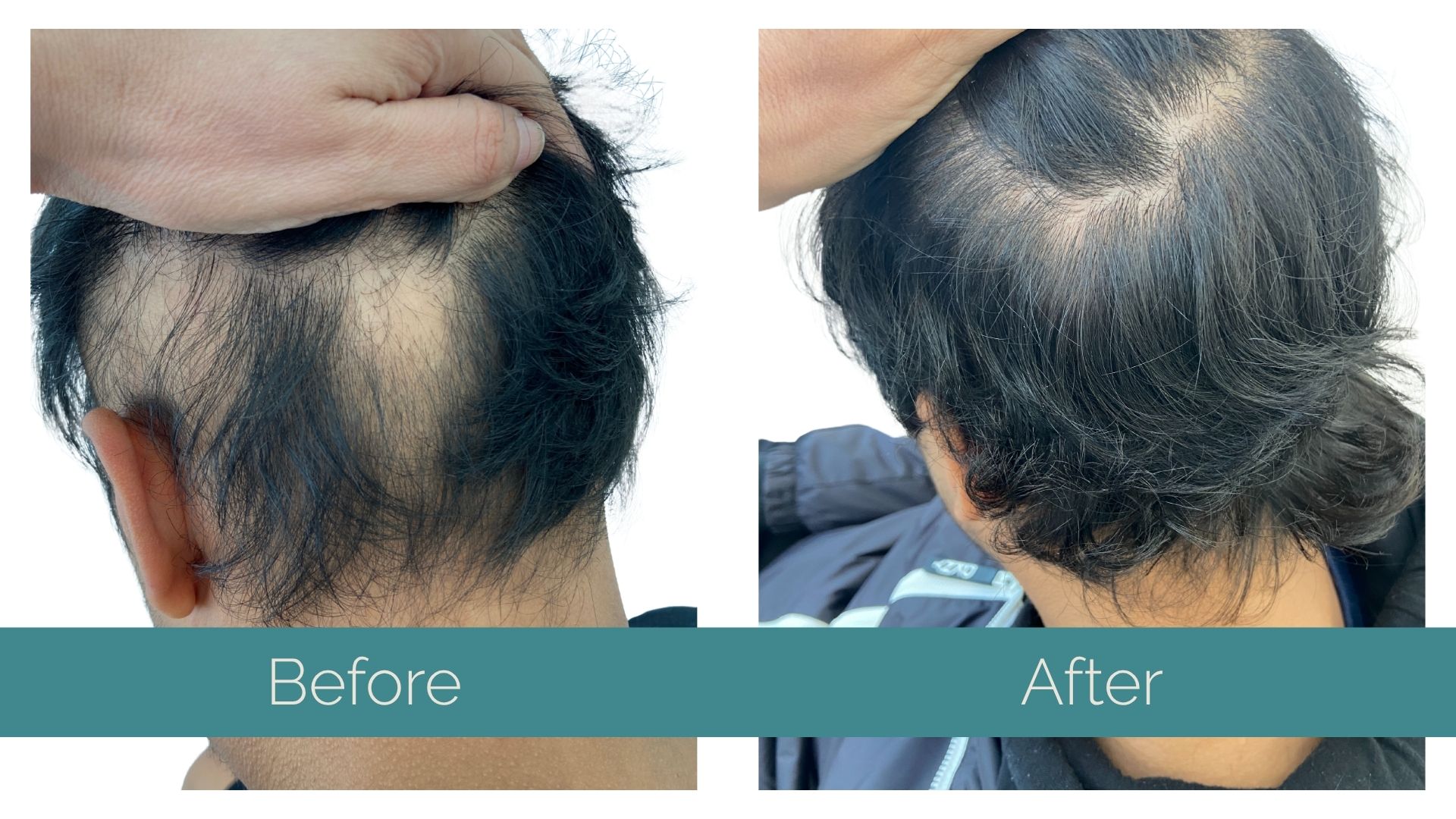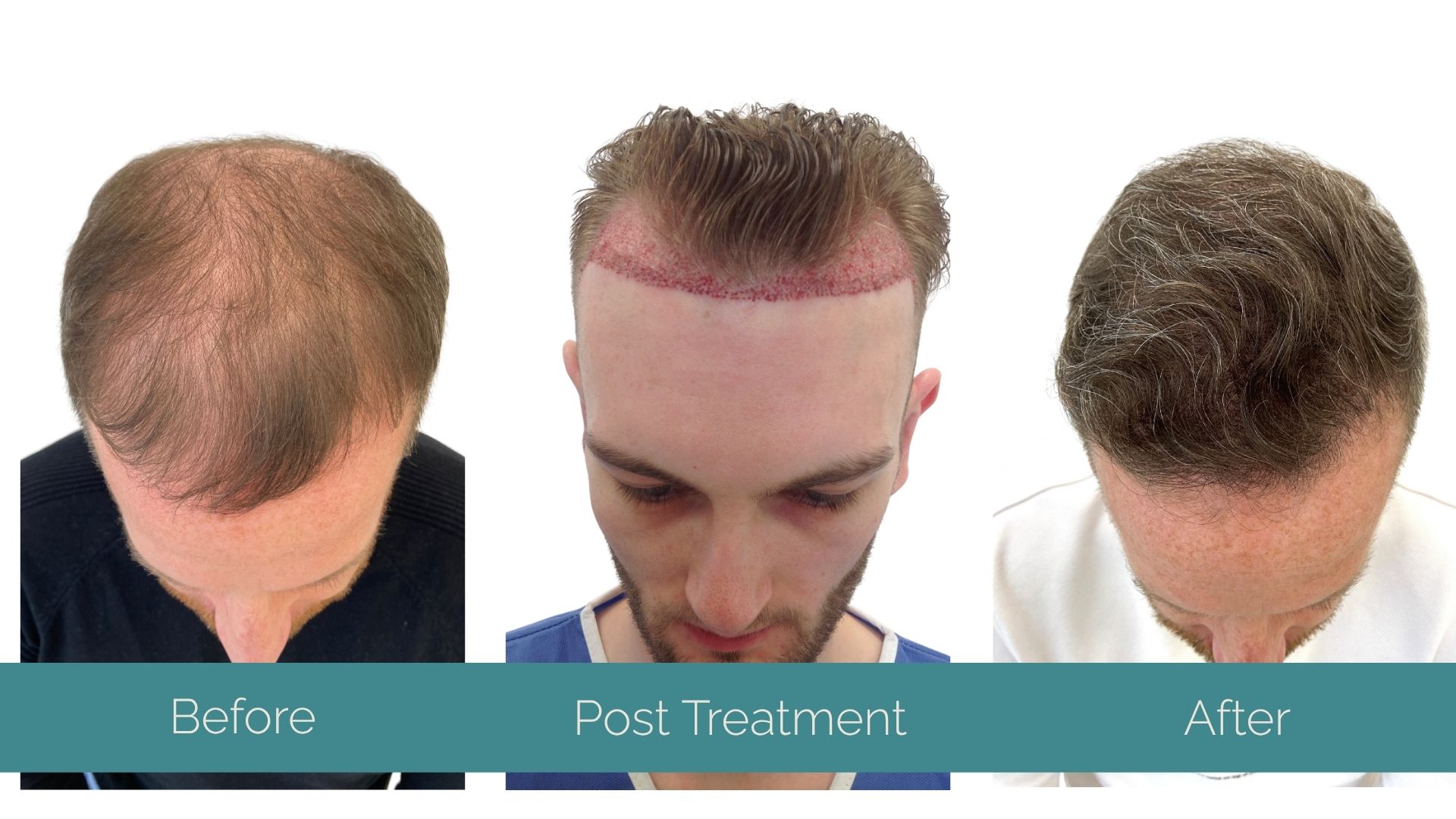

For plenty of men, the first signs of hair loss don’t arrive with drama. They arrive quietly – a hairline that seems to sit a few millimetres higher, or a crown that looks a touch thinner when the sun hits it.
Male pattern baldness (also called androgenetic alopecia) is the most common cause of progressive hair loss in men. It’s typically gradual, often predictable, and very individual.
Some men notice a steady change over years. Others feel like it speeds up in a single season. The good news is that understanding the stages makes the whole thing feel less like a mystery – and more like a map.
The scale most professionals use (and why it matters)
Clinicians often describe male pattern baldness using the Norwood–Hamilton scale.
You don’t need to memorise the chart, but the logic behind it is useful: male pattern baldness tends to follow a recognisable route, usually beginning at the temples and/or crown, then progressing across the top of the scalp.
Knowing your stage can help you do three practical things. First, it helps you spot whether your hairline is simply maturing (a subtle shift that many men experience) or genuinely receding. Second, it helps you set realistic expectations for any treatment. Third, it can guide conversations with a professional if you decide you want support.
Stage 1: No visible loss (but you might be watching closely)
At this early point, hair looks broadly the same as it always has.
You may still feel anxious – especially if baldness runs in the family – but the scalp doesn’t show obvious thinning, and the hairline hasn’t meaningfully moved.
This stage is less about action and more about awareness. If you’re curious, you can take a baseline photo in consistent lighting every couple of months. It sounds overly clinical, but it’s a simple way to separate real change from worry-fuelled guesswork.
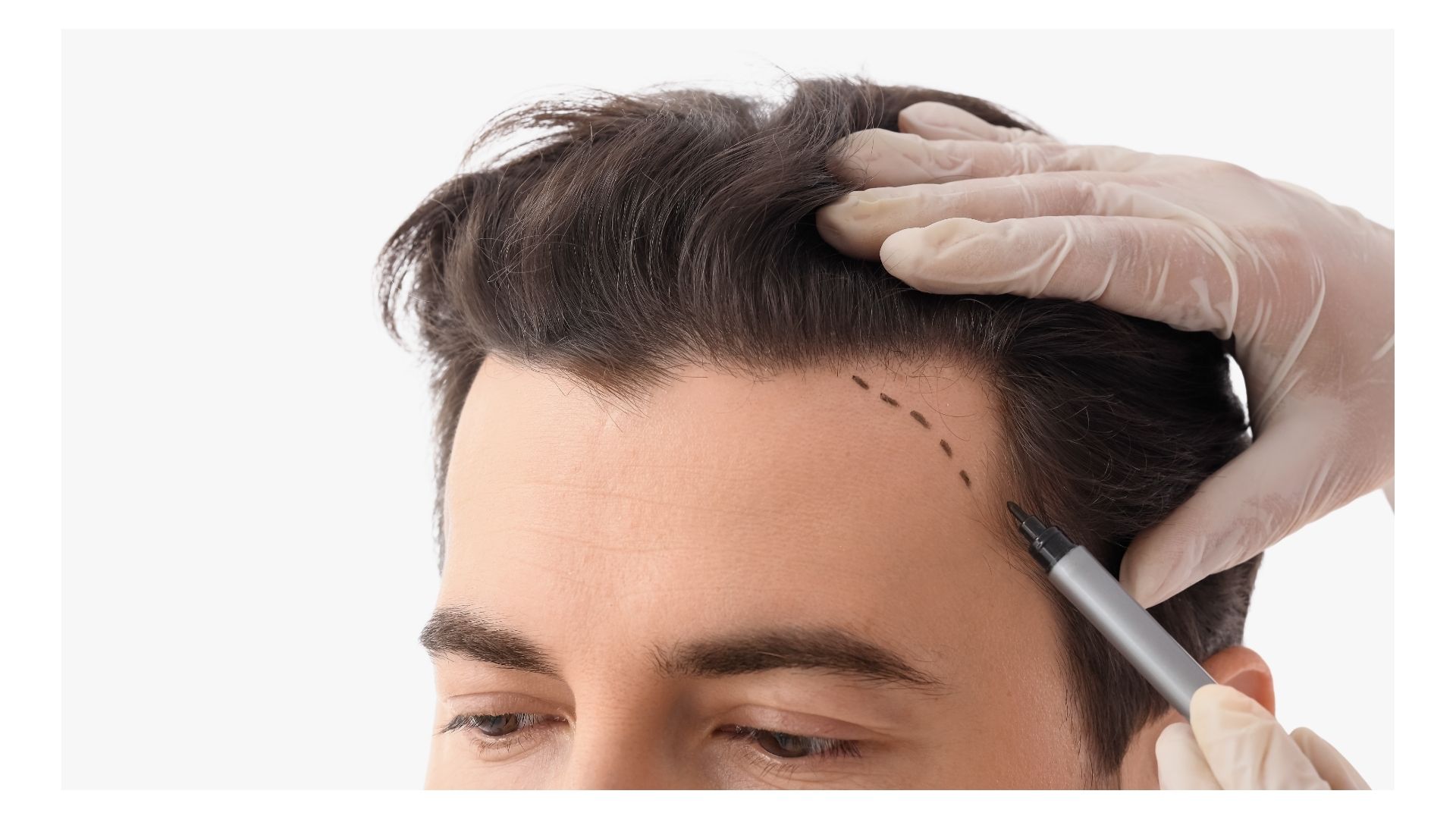
Stage 2: The hairline starts to “edit itself” at the temples
This is where many men first clock something is different.
The temples begin to thin, and the hairline subtly recedes into a gentle “M” shape. Often the change is so gradual it hides in plain sight – until you compare old photos or notice your fringe behaving differently.
At this stage, hair elsewhere usually stays dense. The main giveaway is shape: the hairline looks less straight and more sculpted by time. If you’re the sort of person who likes to be proactive, early intervention tends to be easier than late intervention – but it’s equally valid to simply monitor and decide later.
Stage 3: Crown thinning joins the story
If temple recession is the opening chapter, crown thinning is where the plot becomes easier for others to notice.
You may see a small, thinning spot at the top-back of the head, especially under bright lighting or in photos taken from above (the classic “group photo betrayal”). Some men experience temple recession first, others crown thinning first, and many get a blend of both.
Importantly, this stage can remain stable for years. It’s not automatically a slippery slope – but it is usually a sign that the follicles on top of the scalp are becoming more sensitive to the hormonal and genetic factors driving male pattern baldness.
Stage 4: Diffuse thinning – when it feels harder to “style around it”
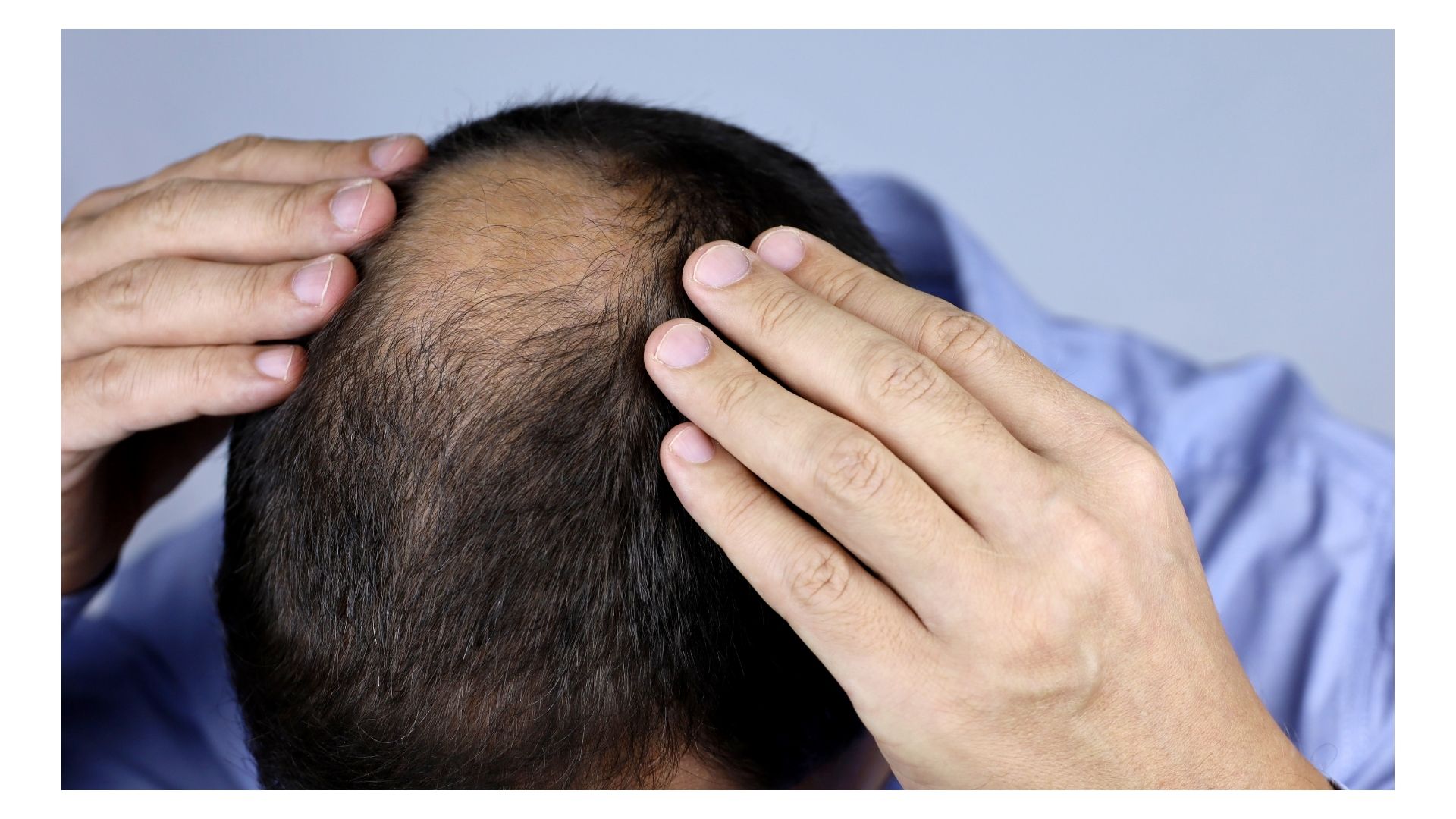
Diffuse thinning is less about one obvious bald patch and more about an overall reduction in density across the top.
You might still have hair everywhere, but it’s finer, less forgiving, and doesn’t sit the way it used to. Hairstyles that once added volume may start to look flatter, or you may find yourself constantly adjusting your hair in mirrors and phone cameras.
This is also the stage where men often become more emotionally aware of the change. Not because it’s “worse” in any objective sense, but because it can feel harder to control. If you’re considering treatment, many people begin exploring options more seriously here.
Stage 5: The bridge narrows – hairline and crown begin to connect
As male pattern baldness progresses, the receding hairline at the front and thinning at the crown can start to move towards one another.
The “bridge” of hair separating the two areas becomes narrower and sparser. This is the point where the classic pattern is unmistakable: more scalp is visible across the top, while the sides and back remain comparatively stronger.
For men thinking about restoration, this stage often triggers more structured decision-making. Some start considering prescription approaches. Others explore non-surgical methods. And plenty decide the simplest route is a shorter haircut that removes the contrast between thick and thin.
Stage 6: Extensive loss across the top
Here, the top of the scalp has significantly less coverage, and the remaining hair often forms a clear horseshoe or “U” shape around the sides and back. The follicles on top may be miniaturised to the point where regrowth is unlikely without medical or surgical intervention.
This stage can bring clarity. Some men feel more settled because there’s less ambiguity – it’s obvious what’s happening, and you can choose a direction. That might mean exploring hair systems, embracing a shaved look, or seeking specialist support to understand what’s realistic.
Stage 7: Complete baldness on top (with varying density at the sides)
In the final stage, there is little to no hair on the top, front, or crown. The sides and back may remain, but can also become thinner with age. For many men, this is the endpoint of androgenetic alopecia.
It’s worth saying plainly: at this stage, lots of men stop chasing solutions and focus on personal style. A clean shave, a well-chosen beard style (if you can grow one), and confidence can be a strong combination – and many men report that the decision to “own it” feels surprisingly freeing.
So what causes it, really? Genetics, hormones, and follicle sensitivity
Male pattern baldness is primarily genetic and linked to sensitivity to dihydrotestosterone (DHT), a hormone derived from testosterone.
In men who are predisposed, DHT gradually causes susceptible hair follicles – usually on the top and front of the scalp – to shrink over time. This process is called miniaturisation.
As follicles miniaturise, hairs grow back finer and shorter, until eventually the follicle becomes dormant. The sides and back tend to be more resistant, which is why that “horseshoe” pattern is so common.
It’s not about having “too much testosterone”, and it’s not usually caused by shampoos, hats, or how often you wash your hair.
What you can do at different stages (without panic-buying everything online)
The most important point is this: management depends on your goal. Some men want to slow loss. Some want to restore. Some want to simplify. All are valid.
In earlier stages, many people look into topical options such as minoxidil, which is applied to the scalp, or discuss finasteride, a prescription medication that reduces DHT. These options aren’t suitable for everyone, and they can involve side effects and ongoing use – so it’s worth discussing them with a qualified clinician rather than treating the internet like a pharmacy aisle.
In mid-to-later stages, men may explore hair restoration procedures such as transplants, where hair is relocated from more resistant areas to areas of loss. Others consider non-surgical hair systems, which have improved massively in realism and comfort over recent years.
And for those who want the lowest-maintenance route, a shorter cut (or shaving) can reduce contrast and often looks sharper than trying to “camouflage” thinning.
When to get it checked (because not all hair loss is the same)
Male pattern baldness is common, but it isn’t the only kind of hair loss. If you’re losing hair suddenly, experiencing patchy bald spots, scalp redness, itching, pain, or shedding that feels dramatic, it’s smart to consult a medical professional.
Conditions like alopecia areata, scalp inflammation, or other health factors can sometimes mimic or complicate the picture.
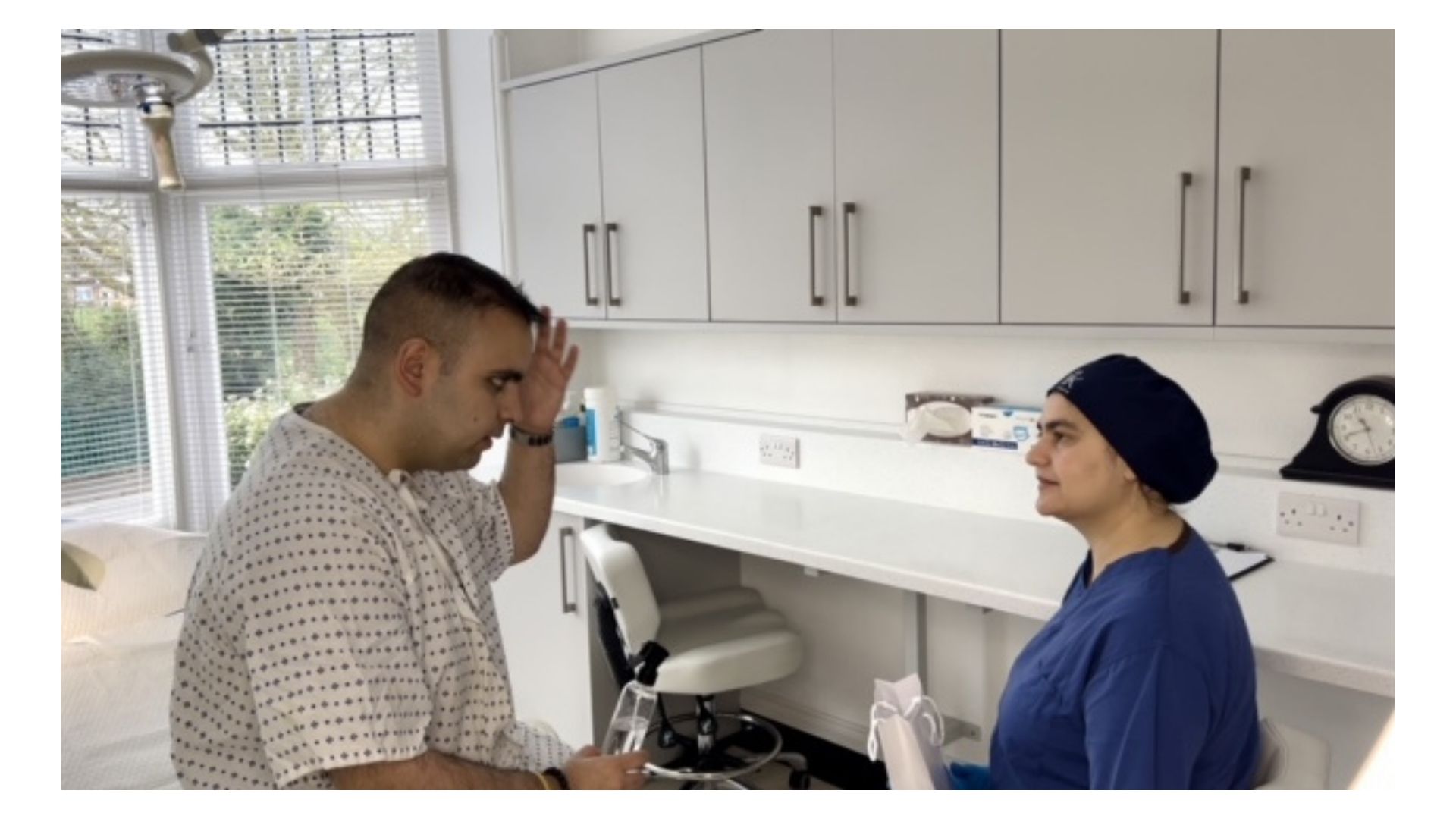
If you want tailored guidance, a consultation with a dermatologist or a hair loss clinic – such as IK Clinics – can help you confirm the type of hair loss, understand your stage, and talk through realistic options without the noise.
The bottom line: a stage isn’t a sentence – it’s information
Male pattern baldness can feel personal because it changes how you recognise yourself. But it’s also incredibly common, and it follows patterns we understand well.
When you know the stages, you stop relying on guesswork and start making clearer choices – whether that’s early action, a long view, or a confident decision to embrace the change.
Hair or no hair, the most noticeable thing is rarely the hairline itself. It’s how comfortably you carry it.
About IK Clinics
We don’t just specialise in FUE Hair Transplants, we also offer other hair restoration treatments, such as Stem Cell Therapy and Plasma Therapy (PRP). Additionally, we also provide a range of anti-aging treatments to help you achieve that ‘I feel good’ feeling.
Get in touch to find out more and book your consultation.